Back to blog
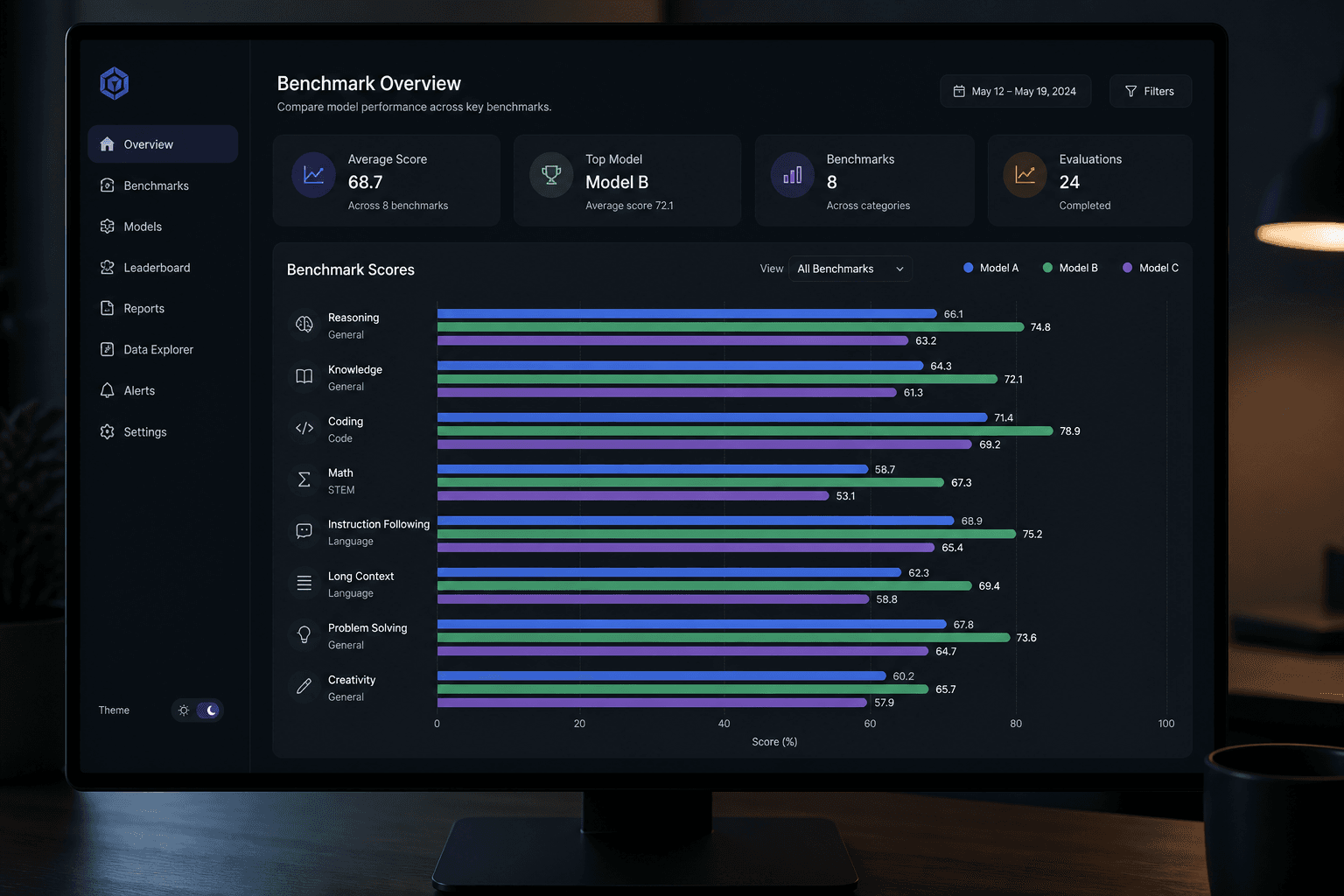
Grok 4.6 benchmark comparison (source: xAI Grok 4.6 announcement, August 2026)
Coding and agent benchmarks only (source: xAI, August 2026)
11 min read
xAI Introduces Grok 4.6: Benchmarks, Pricing, and What Founders Should Know
A breakdown of xAI's Grok 4.6 release—agentic coding benchmarks vs Grok 4.5 and GPT-5.6 Sol, API pricing, Cursor availability, and what SaaS founders should do this week.
xAI introduces Grok 4.6: a model built for long-running agents
On August 12, 2026, xAI announced Grok 4.6, the latest upgrade to its Grok model family. According to the official release on x.ai, Grok 4.6 builds directly on Grok 4.5 with a sharper focus on long-running agents and more ambitious interactive and visual work. That framing matters because it signals where xAI expects the most value: not just faster chat replies, but sustained multi-step work across research, coding, analysis, and product building.
If you have used earlier Grok versions in Cursor, Grok Build, or through an API, the practical difference is continuity. Grok 4.6 is designed to stay with complex tasks across many steps—whether that means researching an unfamiliar market, working across a large codebase, turning a product idea into a working prototype, or refining a visual interface through several rounds of feedback. For founders and product teams, that is closer to hiring a junior builder who can hold context than to using a autocomplete tool.
xAI also positioned Grok 4.6 as stronger on frontier intelligence benchmarks, including the Artificial Analysis Intelligence Index—a composite score across nine benchmarks where Grok 4.6 reportedly matches GPT-5.6 Sol. The company is making the model available immediately in Cursor and Grok Build, with API access and distribution through partners including OpenRouter, Vercel, and Cloudflare. For the first week after launch, xAI offered doubled included usage inside Grok Build and Cursor so developers could stress-test the model without burning through quotas on day one.
For SaaS teams, the announcement is less about model hype and more about a shift in what AI assistants can reliably do inside a product workflow. When a model can maintain context across dozens of tool calls, self-check its output, and produce stronger first passes on visual projects, it changes how you scope MVPs, how designers collaborate with engineering, and how quickly a small team can validate ideas. Grok 4.6 does not replace product judgment—but it compresses the distance between concept and testable artifact.
This post breaks down what changed in Grok 4.6, how it compares to Grok 4.5 and leading competitors on published benchmarks, what it costs, and what founders should actually do with the release this week.
What changed in training and capabilities
xAI’s release notes describe a longer supplemental training run for Grok 4.6 than Grok 4.5, using curated model-generated data for reasoning and advanced technical concepts, high-quality engineering data, and an improved optimizer and training recipe. That foundation fed into supervised fine-tuning and reinforcement learning stages designed for agentic work.
A notable pipeline detail: xAI used Grok 4.5 to regenerate SFT trajectories across reasoning efforts, agent harnesses, and domains including STEM, software engineering, and knowledge work—then filtered problematic traces with model-based checks. The result, according to xAI, is stronger performance and improved behavior before RL training on agentic tasks spanning kernel optimization, web development, computer-aided design, and general coding environments.
In practice, xAI highlights three capability shifts founders and builders will feel immediately.
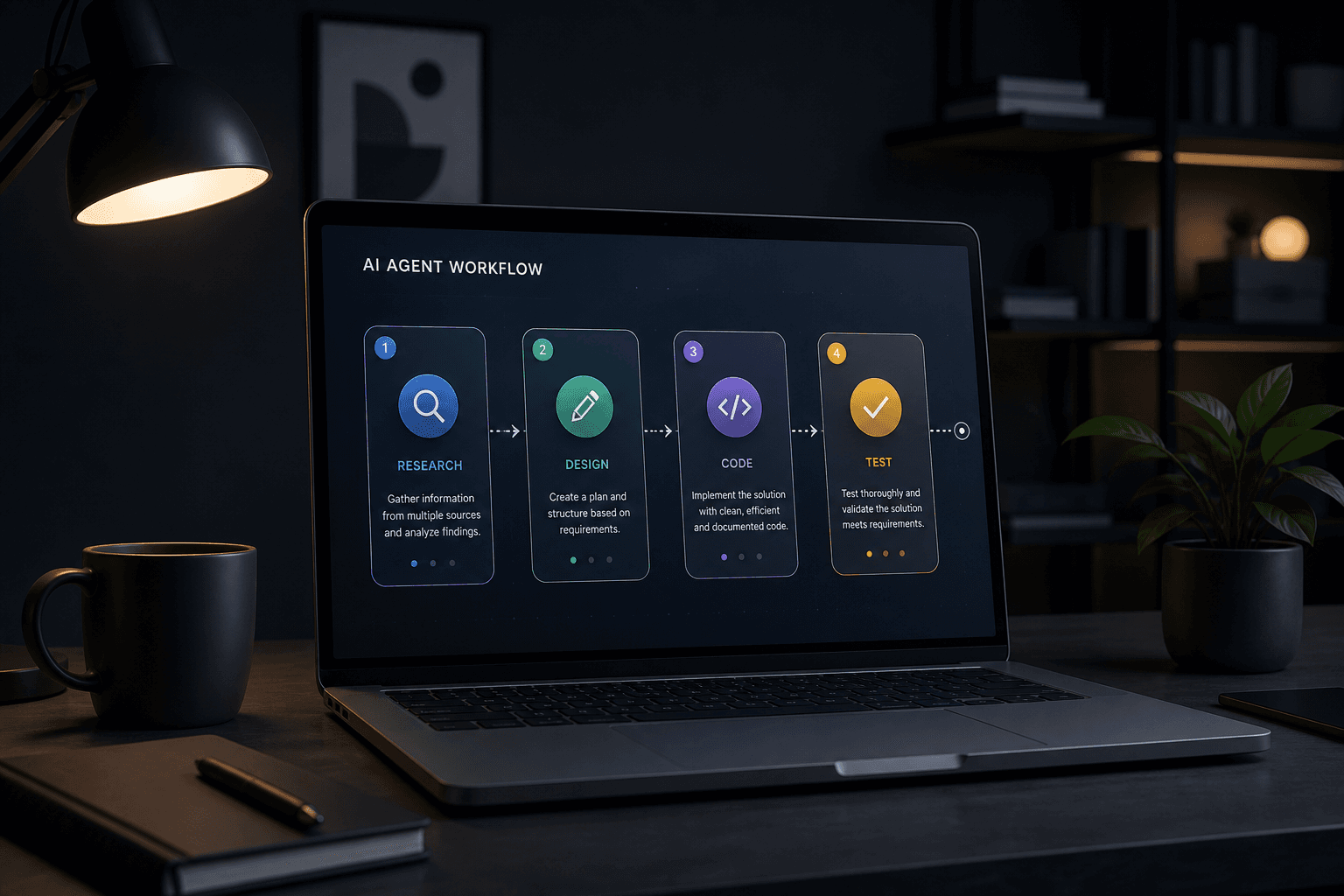
First, persistence on long trajectories. Grok 4.6 is tuned to carry multi-step projects without losing the thread—useful when you ask an agent to research a domain, outline an app, implement core interactions, and iterate after feedback in one session.
Second, stronger first passes on visual and interactive work. xAI reports that Grok 4.6 establishes structure and visual language for applications in a single pass more often than Grok 4.5 did—especially valuable when the fastest path to quality is starting with something substantial and refining in the loop.
Third, more self-testing and verification on longer runs. The model increasingly checks its own work before moving on, which reduces obvious errors in generated code and layouts—though human review remains essential for production systems.
Safety calibration also expanded. xAI describes Grok 4.6 safeguards as improved relative to capability growth, with broader pre-deployment testing and post-deployment review—relevant if you are using the model for vulnerability patching, engineering design acceleration, or research assistance where misuse risk must be managed deliberately.
Full benchmark comparison: Grok 4.6 vs Grok 4.5 and rivals
Benchmarks never tell the whole story, but xAI published a detailed comparison table against Grok 4.5 High, GPT-5.6 Sol Max, and Fable 5 Max across agentic coding and knowledge work evaluations. The headline result on the Artificial Analysis Intelligence Index is a tie at 61 between Grok 4.6 and GPT-5.6 Sol Max—both ahead of Grok 4.5 High at 56, with Fable 5 Max slightly ahead at 62 on that composite score.
Where Grok 4.6 stands out most clearly is step-change improvement over its predecessor. On DeepSWE v1.1—a software engineering benchmark—Grok 4.6 scores 65.9% versus 54% for Grok 4.5 High. On Terminal-Bench v3.0, it jumps from 15.7% to 26%. On APEX-Agents, it moves from 47.1% to 57.5%. On GDPVal-AA v2, a knowledge work eval, Grok 4.6 reports 1753 versus 1526 for Grok 4.5. Those are large relative gains generation-over-generation.
Against GPT-5.6 Sol Max, the picture is mixed—which is expected at the frontier. Grok 4.6 leads on GDPVal-AA v2 and Harvey LAB (Vals), trails on DeepSWE and Terminal-Bench, and sits roughly even on several coding and agent benchmarks. Fable 5 Max leads on CursorBench v3.2 and FrontierCode v1.1 (Extended) in xAI’s published table, while Grok 4.6 leads or ties on several knowledge-work oriented scores.
For product teams, the takeaway is not “pick the highest number.” It is match the eval to your workflow. If your team lives in Cursor doing repo-wide refactors, CursorBench and DeepSWE are signal. If you are building research-heavy internal tools or automating knowledge workflows, GDPVal-AA and AA-Briefcase matter more. If you need terminal and DevOps agent behavior, Terminal-Bench deserves weight.
The table below reproduces xAI’s published scores. Competitor figures are drawn from respective developers’ system cards or public leaderboards, as noted by xAI.
| Evaluation | Grok 4.6 High | Grok 4.5 High | GPT-5.6 Sol Max | Fable 5 Max |
|---|---|---|---|---|
| AA Intelligence Index | 61 | 56 | 61 | 62 |
| GDPVal-AA v2 | 1753 | 1526 | 1728 | 1741 |
| CursorBench v3.2 | 69.9% | 66.7% | 67.2% | 70.5% |
| DeepSWE v1.1 | 65.9% | 54% | 73% | 70% |
| FrontierCode v1.1 (Extended) | 61.3% | 56.6% | 60.6% | 63.6% |
| APEX-Agents | 57.5% | 47.1% | 56.7% | 59.2% |
| Terminal-Bench v3.0 | 26% | 15.7% | 34.6% | 34.1% |
| APEX-SWE | 56.4% | 53.6% | — | 58.8% |
| AA-Briefcase | 1577 | 1313 | 1502 | 1574 |
| Harvey LAB (Vals) | 15.8% | 12.9% | 2.5% | 11.3% |
Agentic coding benchmarks at a glance
Software founders rarely need all ten benchmarks at once—but several directly map to daily work in Cursor, CI pipelines, and MVP builds. Grouping them makes the tradeoffs easier to scan.
CursorBench v3.2 measures performance in Cursor-like coding environments. Grok 4.6 at 69.9% is a solid jump from Grok 4.5’s 66.7% and slightly ahead of GPT-5.6 Sol Max at 67.2%, though Fable 5 Max leads at 70.5%. If your team already uses Cursor for feature work, this eval is the closest proxy to “will it feel better this week?”
DeepSWE v1.1 and APEX-SWE focus on software engineering depth—multi-file reasoning, bug fixing, and sustained implementation tasks. Grok 4.6 improves markedly over 4.5 on DeepSWE but still trails GPT-5.6 Sol Max and Fable 5 Max on xAI’s table. For hard engineering problems, you may still want to compare models side-by-side on your own repo rather than trusting leaderboard gaps alone.
Terminal-Bench v3.0 captures CLI and environment interaction—relevant when agents run installs, scripts, and deployment steps. Grok 4.6 doubles Grok 4.5’s score but remains behind GPT-5.6 Sol Max. If your workflow depends on autonomous terminal use, run a controlled test before switching defaults.
FrontierCode v1.1 (Extended) and APEX-Agents reflect longer-horizon coding and agent planning. Grok 4.6 posts meaningful gains over 4.5 and competitive numbers against GPT-5.6 Sol Max—aligned with xAI’s marketing emphasis on agents that do not lose the plot.
Knowledge work scores—GDPVal-AA v2, AA-Briefcase, Harvey LAB—show Grok 4.6 competitive or leading positions. That supports use cases like drafting specs, summarizing research, preparing investor materials, and structuring product documentation alongside code.
The condensed table below highlights coding- and agent-oriented evals only, for quick reference when choosing a default model in Cursor or your API stack.
| Benchmark | Grok 4.6 | Grok 4.5 | GPT-5.6 Sol Max | Best for |
|---|---|---|---|---|
| CursorBench v3.2 | 69.9% | 66.7% | 67.2% | In-IDE coding sessions |
| DeepSWE v1.1 | 65.9% | 54% | 73% | Multi-file SWE tasks |
| FrontierCode v1.1 | 61.3% | 56.6% | 60.6% | Extended code generation |
| APEX-Agents | 57.5% | 47.1% | 56.7% | Multi-step agent planning |
| Terminal-Bench v3.0 | 26% | 15.7% | 34.6% | CLI / environment tasks |
| APEX-SWE | 56.4% | 53.6% | — | Software engineering workflows |
Pricing, availability, and integration partners
xAI made Grok 4.6 available on launch day across several surfaces—important because model quality only matters if it fits your existing toolchain.
Inside developer products, Grok 4.6 shipped immediately to Cursor and Grok Build. xAI also listed API availability plus distribution through OpenRouter, Vercel, and Cloudflare—giving teams flexibility between first-party API keys and platform integrations.
API pricing, as published by xAI, starts at $2 per million input tokens and $6 per million output tokens. A faster variant is available at twice the price—useful for latency-sensitive interactive apps, expensive if you batch large code reviews without monitoring spend.
For bootstrapped SaaS teams, token economics still favor narrow, scoped agent tasks over “fix everything in the repo” prompts. Grok 4.6’s improved persistence can increase output length on long trajectories; that helps quality but can raise bills if you do not cap iterations or split work into checkpoints.
The first-week 2x included usage promotion in Grok Build and Cursor was explicitly designed to encourage experimentation. If you are evaluating Grok 4.6 against Grok 4.5 or GPT-5.6 Sol Max, that window is the right time to run identical prompts on real tasks: implement one feature, refactor one module, generate one onboarding flow, and compare diff quality, hallucination rate, and number of follow-up corrections.
Vercel’s presence as a partner matters for Next.js-heavy startups—many Mool Studio clients ship on Vercel. If Grok 4.6 is exposed through your deployment platform or edge network, you can potentially wire agent features into internal tools or customer-facing copilots without standing up a separate inference stack—subject to your security review and data handling policies.
Always verify current pricing and data retention terms on x.ai before sending proprietary code or customer data through any model provider. Benchmark leadership does not automatically mean your compliance requirements are satisfied.
What Grok 4.6 means for SaaS founders and product teams
Model releases are news; workflow change is the product story. Grok 4.6 is most relevant to early-stage SaaS teams in four concrete ways.
First, faster concept-to-prototype loops. When a model can research an unfamiliar domain, propose structure, implement core interactions, and refine UI through feedback, your team can test positioning and UX hypotheses before committing a full sprint. That aligns with how strong MVP design should work: learn quickly with the smallest build that delivers real value.
Second, design–engineering handoff gets tighter. Grok 4.6’s reported strength on visual and interactive first passes means designers and engineers can share richer starting points—clickable flows, component scaffolds, and layout systems that reduce blank-page friction. It does not replace a design system or accessibility review, but it can shrink the time from approved wireframes to something users can click.
Third, agent persistence rewards better scoping. Ironically, better agents punish vague prompts. Teams that define one workflow, acceptance criteria, and non-goals— the same discipline we recommend for MVP scoping—will extract more value from Grok 4.6 than teams that treat it as magic. The model stays on task longer; your job is to make sure the task is the right one.
Fourth, competitive pressure on build timelines. When rivals use frontier models to ship demos, investor-ready prototypes, and internal tools faster, “we’ll design that next quarter” becomes harder to defend. You do not need Grok 4.6 specifically—but you should assume your market includes teams that do.
At Mool Studio, we still see human-led product design as the constraint that separates usable SaaS from impressive demos. AI accelerates execution; it does not replace decisions about activation, pricing, permissions, or what belongs in v1. Use Grok 4.6 to generate options, stress-test flows, and speed implementation—then validate with real users and metrics, not leaderboard scores alone.
How to try Grok 4.6 this week
If you are deciding whether to switch defaults in Cursor or route API traffic to Grok 4.6, treat the evaluation like a lightweight vendor trial—not a religion change.
Step one: pick three real tasks from your backlog, not toy prompts. Examples that map well to Grok 4.6’s strengths: implement a multi-step onboarding flow in your Next.js app; refactor a messy API route with tests; research a competitor feature set and output a structured Notion brief; build a clickable prototype for a new dashboard widget.
Step two: run the same tasks on your current model and Grok 4.6 with identical context files and constraints. Log time to acceptable output, number of manual corrections, and whether the agent lost context mid-task.
Step three: have engineering review generated code for security, dependency choices, and alignment with your stack. Faster UI generation is worthless if it introduces subtle auth bugs or non-idempotent migrations.
Step four: have design review visual output for hierarchy, spacing, and accessibility basics. Strong first passes still need human polish before they represent your brand.
Step five: decide based on workflow fit, not hype. If Grok 4.6 wins on knowledge work and your bottleneck is coding, keep a coding-optimized default. If it wins on CursorBench-like tasks and you live in the IDE, switch for daily driver use and monitor cost.
You can start via Cursor’s model picker, Grok Build at x.ai/build, or the SpaceXAI API with a new key. Documentation and CLI install paths are linked from the official announcement at x.ai/news/grok-4-6.
Grok 4.6 is a meaningful step for long-running agents and visual product work—especially versus Grok 4.5. For SaaS founders, the strategic response is straightforward: experiment while usage promotions apply, measure on your own repo and roadmap, and keep product scope disciplined so better AI translates into faster learning—not bigger, unfocused v1s.
Related articles
11 min read
Design Systems for AI Features: Primitives, Review States, and Shipping Velocity
AI features ship faster when design systems define the review contract first—primitives, tokens, and states—not when every squad invents its own sparkle button.
11 min read
Answer Engine Optimization for SaaS: Get Your Product Cited in AI Answers
SEO still matters—but buyers now ask AI assistants first. AEO is how you get your SaaS cited in those answers with pages models can quote accurately.