Back to blog
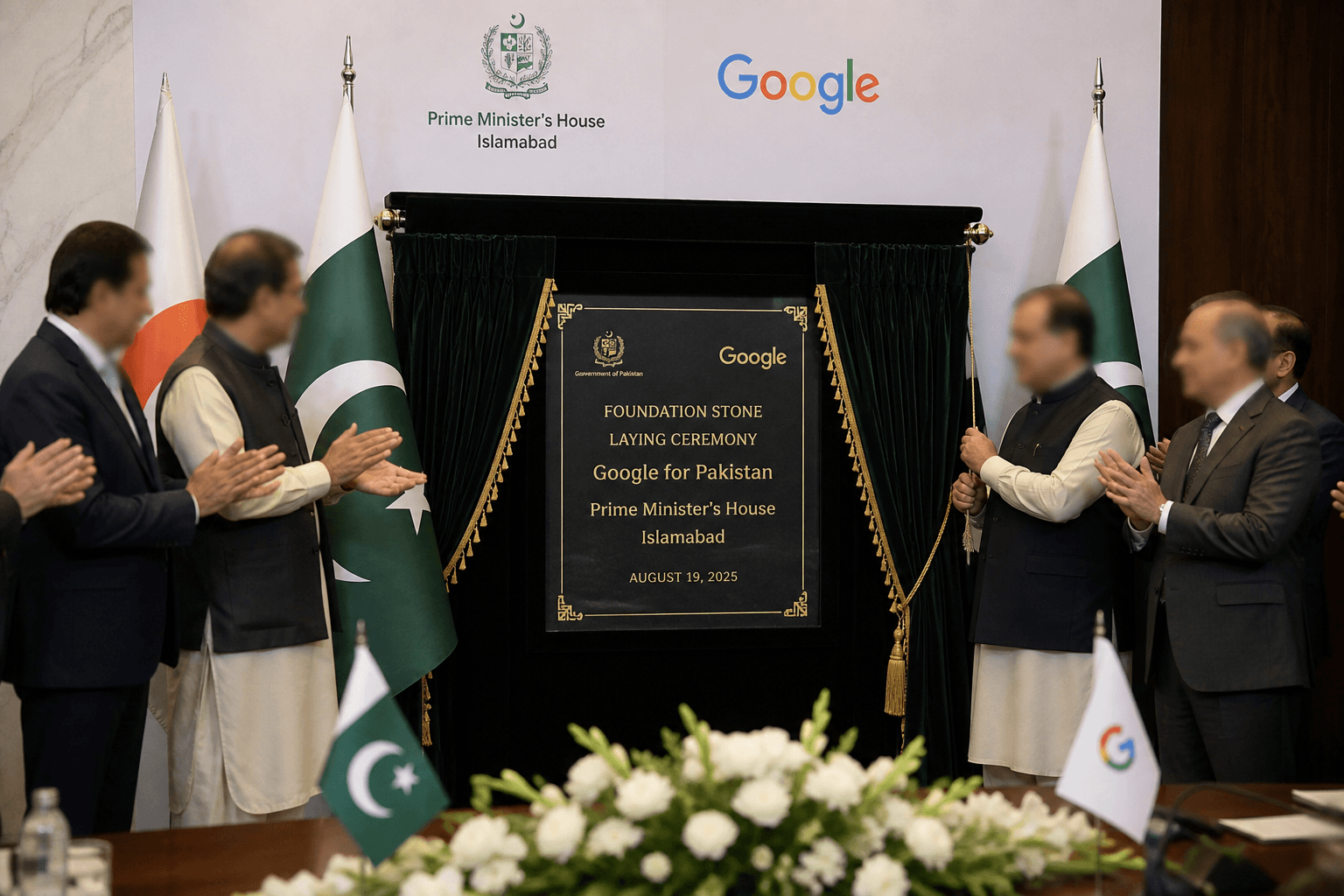
Google’s three investment pillars for Pakistan’s digital economy (August 2026 announcements)

11 min read
Google Opens First Local Office in Pakistan, Backs $30 Billion IT Export Ambition
Google inaugurated its first Pakistan office in Islamabad on August 18, 2026, aligning with the government’s $30B IT export goal—upselling, Chromebooks, Gemini for students, and what founders should watch.
Google opens its first local office in Pakistan
On August 18, 2026, Google formally opened its first local office in Pakistan—a milestone Prime Minister Muhammad Shehbaz Sharif described as a "great day" and a "beautiful new journey" in the country’s digital transformation. The inauguration took place at the Prime Minister’s House in Islamabad, where the premier, Google’s Vice President for Government Affairs and Public Policy Wilson L. White, US Chargé d’Affaires Natalie Baker, and Federal Minister for Information Technology Shaza Fatima Khawaja jointly unveiled a foundation plaque marking the opening of Google’s Pakistan office.
According to reporting from Arab News, Radio Pakistan, The Express Tribune, and Geo News, the ceremony capped a visit by a nine-member Google delegation led by White. The delegation met Sharif ahead of the inauguration to discuss Pakistan’s digital economy, youth upskilling, hardware manufacturing, and the government’s ambition to grow annual information technology exports to $30 billion.
For Pakistan’s startup and product community, a local Google presence is more than symbolism. It signals that a global platform company sees enough scale, talent, and policy momentum to justify permanent in-country operations—not just remote programs or partner-led initiatives. That matters for founders building SaaS products, agencies shipping client work abroad, and engineering teams trying to access cloud, AI, and developer tooling with clearer local support.
Google has invested in Pakistan for more than a decade, but until now much of that work ran through regional structures, partnerships, and remote teams. A local office creates a physical anchor for program scaling, government coordination, and enterprise relationships. Whether you are a founder in Lahore, Karachi, or Islamabad, the practical question is what changes now: faster access to initiatives, clearer pathways for certifications, and potentially deeper integration with Pakistan’s export and manufacturing push.
This post unpacks what was announced, how it connects to the $30 billion IT export target, and what product teams and digital businesses should watch over the next twelve months.
The $30 billion IT export ambition—and where Google fits
Pakistan’s government has set an ambitious target: raise annual information technology and IT-enabled services exports to $30 billion. That goal sits inside a broader push to expand the digital economy through startup investment, artificial intelligence adoption, cloud computing, digital skills training, and improved connectivity. It is not a single-policy lever—it is a portfolio bet that human capital plus infrastructure plus global market access can compound.
At the inauguration, Wilson White explicitly aligned Google’s goals with the prime minister’s export ambition. "Your ambition of making Pakistan a $30 billion IT export hub very much aligns with the goals that we have at Google," he said, according to Arab News and Geo TV. That alignment is strategically important. Export targets often fail when governments announce numbers without global partners who control distribution, trust, and buyer access. Google does not replace export policy, but it influences the pipelines through which Pakistani talent and products reach global markets—search, ads, cloud, developer ecosystems, certifications, and AI tools.
White outlined three investment pillars Google will use to support the export push, as reported across Pakistani media:
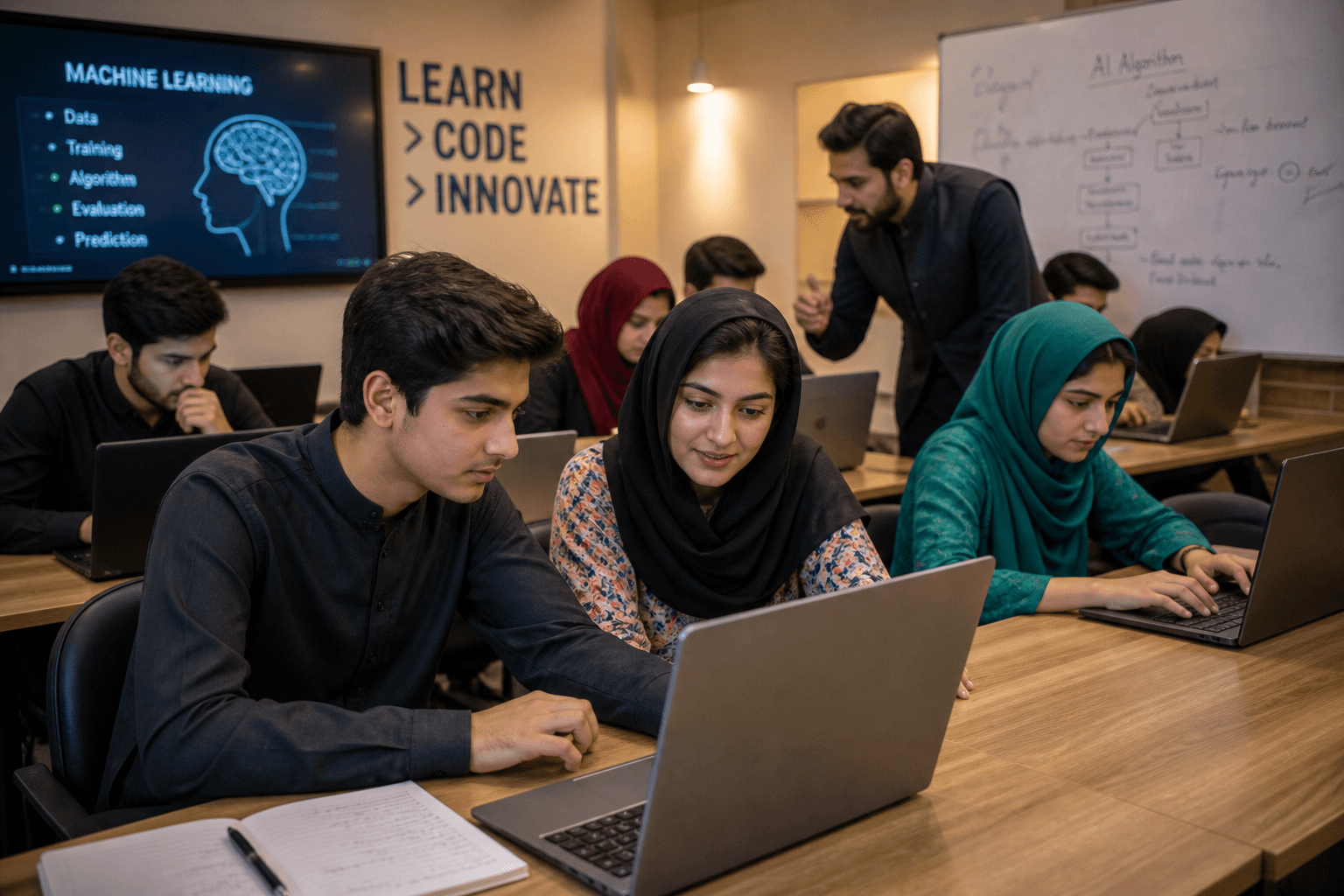
First, investing in Pakistani people—upskilling, career certificates, and teacher and school programs that prepare workers for a digital economy.
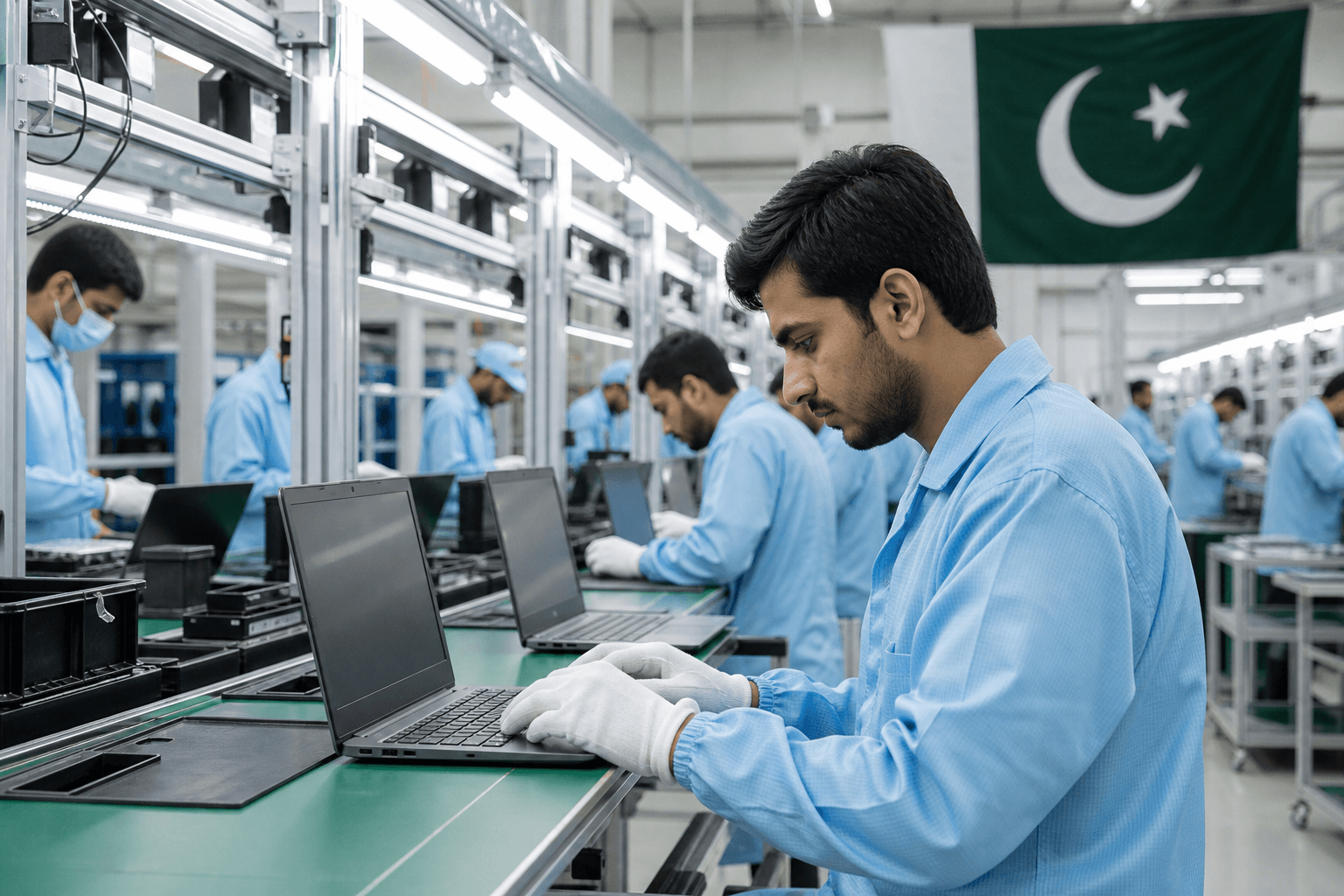
Second, investing in manufacturing and infrastructure for hardware exports—including the Chromebook assembly ecosystem Google has built with local partners.
Third, investing in local businesses—helping Pakistani companies use digital tools to reach customers at home and abroad.
For SaaS founders, the people and local business pillars are the most direct. Hardware and Chromebooks matter for device access and education volume, but export growth in software and services depends on sales capability, product quality, payments, compliance, and repeatable delivery. Google’s local office may accelerate programs that reduce friction on the demand side—helping businesses get online, advertise, and operate—but founders still need strong product discipline to convert attention into recurring revenue.
The table below summarizes the three pillars and what they mean in practice for digital businesses.
| Pillar | Focus | Reported impact / initiative |
|---|---|---|
| People | Upskilling and workforce readiness | 1M+ Pakistanis upskilled via career certificates; school and teacher programs |
| Hardware & infrastructure | Local manufacturing and export capacity | Chromebook assembly in Haripur; regional export potential |
| Local businesses | Digital adoption and global reach | Rs3.9T economic activity over 10 years; 960,000 jobs supported |
A decade of impact: jobs, economic activity, and upskilling
Google’s Pakistan story did not start on August 18. White noted at the ceremony that Google has been "investing in and committed to Pakistan for over a decade," and quantified part of that legacy in terms policymakers and founders can understand.
According to Arab News, Radio Pakistan, and The Express Tribune, Google said its activities contributed to more than Rs3.9 trillion of economic activity for Pakistani businesses and households over the past ten years, supporting over 960,000 jobs. Those figures are aggregate and methodology-dependent—exact definitions matter for economists—but the directional signal is clear: Google’s platforms have already touched a large share of Pakistan’s commercial and creator economy.
On skills, White said Google has contributed to upskilling more than one million Pakistanis through career certificates and by working with schools and teachers. That scale matters for product teams hiring designers, engineers, and growth operators. Certificate pipelines do not replace university depth or specialized product craft, but they widen the base of people who can participate in digital work—support, implementation, QA, no-code operations, and junior technical roles that startups rely on.
Prime Minister Sharif, in his meeting with the delegation, appreciated Google’s role in advancing Pakistan’s digital economy and highlighted initiatives that helped thousands of Pakistani youth secure productive employment, according to Radio Pakistan. He expressed hope that Google would expand upskilling and empowerment programs now that a local office provides a foundation for scaling.
For founders, the hiring implication is twofold. A larger skilled base can reduce recruiting friction for implementation and operations roles. It also raises the bar for differentiation—when many teams have access to similar tooling and certificate-level skills, product quality, UX, and domain expertise become the moat. That is especially true for SaaS companies targeting export markets where buyers compare you against global alternatives, not local peers alone.
Digital Nation Pakistan and government digital transformation
The inauguration did not happen in a policy vacuum. Prime Minister Sharif briefed the Google delegation on the government’s "Digital Nation Pakistan" vision and ongoing initiatives to digitize governance and the economy, according to Radio Pakistan and The Express Tribune. He reiterated commitments to modernize IT infrastructure and expand youth training in information technology and artificial intelligence.
Sharif described Pakistan as undergoing a "major digital transformation" across governance, including digitization of government affairs and the economy. That framing matches what many founders experience in practice: e-government services, digital payments growth, and increasing expectations that businesses interact with the state online. A global technology partner with local presence can influence standards adoption—identity, cloud, productivity suites, and AI tooling—that shape how companies build internal ops and customer-facing products.
Federal IT Minister Shaza Fatima Khawaja’s presence at the plaque unveiling underscores the ministry’s stake in the partnership. In November 2025, Khawaja announced that Google would manufacture approximately 600,000 Chromebooks annually in Pakistan through collaboration with the Ministry of Defence Production and the National Radio and Telecommunication Corporation—a public-private partnership launched in Haripur. The Express Tribune linked that manufacturing push to Tuesday’s ceremony, with White expressing satisfaction over the Chromebook assembly line and citing "huge potential" to export devices assembled in Pakistan to other countries in the region.
For product leaders, hardware manufacturing may seem distant from SaaS—but device access affects TAM for education products, workforce tools, and any software sold into schools or SMBs. Cheaper, locally assembled Chromebooks can accelerate one-to-one device programs, which in turn shapes how Pakistani students learn software and how edtech products distribute.
Digital Nation Pakistan is not a single app or portal. It is an ecosystem bet. Google’s local office is one node in that ecosystem. Founders should map where their products intersect government digitization—payments, identity, procurement, compliance—and where global platform shifts create new distribution or data constraints.
Free Google Gemini for students: what was announced
One of the most concrete consumer and education announcements tied to the visit was Google’s plan to offer free Google Gemini subscriptions for one year to all students in Pakistan. Wilson White said the company would announce the initiative later in the week of August 18, according to The Express Tribune and Geo News. Geo TV reported that the move is intended to help students acquire modern digital skills and benefit from emerging AI technologies.
If implemented at national scale, that policy could reshape how students write, code, research, and prototype—similar to how other countries have seen rapid AI adoption when access barriers drop. For universities and bootcamps, it lowers the cost of experimenting with AI-assisted workflows. For founders building edtech or productivity tools, it also raises competitive pressure: free frontier-model access becomes the baseline, not a premium feature.
Product teams should not confuse access with product-market fit. Gemini subscriptions help students learn and draft faster; they do not replace curriculum design, assessment integrity, or career pathways. Schools will still need policies for acceptable use, plagiarism, and skill verification. Startups selling into education should assume AI literacy is table stakes and focus on outcomes—placement, projects, credentials, and employer trust.
For SaaS founders more broadly, Pakistan’s student announcement mirrors a global pattern: platform companies bundle AI to capture mindshare early. That affects positioning. If your MVP relies on "we have AI" as the primary value proposition, you are competing with free tools. Stronger strategies tie AI to a specific workflow, data source, or compliance context that standalone chat cannot replicate.
Still, the announcement is a significant demand-side stimulus. More students experimenting with AI today means a larger pool of AI-comfortable junior talent and founders tomorrow—which supports the export ambition if paired with rigorous product and engineering training.
What a local Google office changes for founders and product teams
Ceremonies make headlines; operating reality determines value. A local office can improve coordination with government, universities, accelerators, and enterprise buyers—but founders should translate the announcement into actionable hypotheses.
Program velocity may increase. Sharif noted that with Google’s local presence established, "high-impact programs could be scaled up further," according to Radio Pakistan and Arab News. That could mean more frequent certifications, partner events, cloud credits, or SMB onboarding—if resourced locally rather than routed through regional teams.
Enterprise and public-sector sales paths may clarify. Global vendors often hesitate on public projects without local representation. A Pakistan office does not guarantee procurement wins, but it reduces a common objection in RFPs and security reviews.
Policy feedback loops may shorten. When cloud, AI, and data regulations evolve, local teams can advocate and adapt programs faster than distant headquarters. Founders building regulated products—fintech, health, edtech—should watch whether Google publishes localized compliance guidance or support channels.
Hardware and connectivity programs may expand. Chromebook manufacturing and export talk points to a longer hardware supply chain story. Device programs affect education markets and remote work penetration, which shape software adoption curves.
None of this removes core startup constraints: capital, talent depth in senior product and engineering roles, payment rails for international customers, and ruthless focus on one workflow in an MVP. Google’s office is tailwind, not traction.
If you export services or software, treat the $30 billion target as a market narrative that can open doors—with diaspora, ministries, and trade bodies—but validate demand with paying customers abroad. If you sell domestically, treat upskilling announcements as a signal that competition for digital jobs and side hustles will intensify. Product quality and brand trust matter more as the base level rises.
Looking ahead: from inauguration to export outcomes
Google’s first local office in Pakistan is a milestone because it formalizes a partnership that was already economically significant—Rs3.9 trillion of reported activity, nearly a million jobs touched, and more than a million people upskilled—while aligning explicitly with a national $30 billion IT export goal. The August 18 inauguration, covered by Arab News, Radio Pakistan, The Express Tribune, and Geo News, brought together Pakistan’s highest political office, US diplomatic presence, and Google’s global affairs leadership in a single public signal: Pakistan intends to compete as a digital economy, not only as a low-cost back office.
The near-term watch list for founders is straightforward. Track details of the free Gemini student program—eligibility, verification, and duration. Monitor whether Google publishes local enterprise and cloud support channels tied to the Islamabad office. Follow Chromebook manufacturing and export news from Haripur for education and hardware distribution effects. Watch IT ministry programs that may co-fund training, connectivity, or startup grants alongside global partners.
The strategic watch list is harder but more valuable. Export growth requires products that global buyers renew, not one-off projects. That demands UX discipline, reliable engineering, security practices, and clear positioning—areas where design and product studios contribute directly. As platform access democratizes through AI and certificates, differentiation moves upstack to problem selection, workflow design, and trust.
Pakistan’s digital transformation was already underway before the plaque unveiling. The office opening makes the commitment visible. For product teams, the best response is to build software worth exporting, use new tools where they compress learning cycles, and treat policy tailwinds as leverage—not substitutes—for customer discovery and delivery excellence.
Sources: Arab News (August 18, 2026), Radio Pakistan, The Express Tribune, Geo News.
Related articles
13 min read
What Is GPT-6 Astra in ChatGPT? Computer Use Benchmarks, Pricing, and Founder Takeaways
GPT-6 Astra is OpenAI’s new frontier model for computer use, coding, and professional work. Here is what changed, how it scores, what it costs, and how product teams should use it.
11 min read
xAI Introduces Grok 4.6: Benchmarks, Pricing, and What Founders Should Know
Grok 4.6 focuses on long-running agents and stronger visual first passes. Here is how it compares on published benchmarks and what product teams should do next.